Okay, I haven't done any personal reflection stuff on this book, so I thought I'd devote the last blog to that..
Honestly, I wasnt a big fan of this book and thats saying a lot considering I like some pretty weird books. First, it did not go along with anything I thought I knew about the story of Frankenstein. Second, the long narrative speeches drove my kind of crazy with their boring and pointless details. Third, just didnt really like the story.
However, I will say that I did like how Shelley had the monster show his side of the story. My favorite part of the novel was when the monster told about his time watching the family and how he learned from watching them (even if it was kind of creepy).
The last thing I have to say is that I believe one theme of the story is that Shelley believes men are generally good at heart, and not evil. I have concluded this because deep in his heart-the monster was good. He showed kindness towards the family he watched even though he was never nurtered or raised to love and show compassion.
Thursday, April 22, 2010

so i've been practicing my frankenstein dance...
In the end of the story, the monster takes over the narrative and begs for everyone to sympathize with him and understand his side. The fact that the story ends with the monster as the narrator is a symbol of just how much control he had over the life of Frankenstein. Just by his simple existence, he caused Frankenstein to lose control of his own life. Do I think this was entirely the monster's fault? I'm not sure; both are to blame for the events that occured.
on the same path?
"The delight of Clerval was proportionably greater than mine; his mind expanded in the company of men of talent, and he found in his own nature greater captacities and resources than he could have imagined himself to ahve possessed while he associated with his inferiors" (117).
The characterstics mentioned about Henry are very similar to those of Frankenstein before he created the monster. Henry is excited and eager to learn from others while soaking up as much information that he can while on their journey; contrastingly, Frankenstein is preoccupied with his anxiety about the monster and his current dilemnia. They create foil characters to one another; this contrast shows just different Frankenstein has become.
The characterstics mentioned about Henry are very similar to those of Frankenstein before he created the monster. Henry is excited and eager to learn from others while soaking up as much information that he can while on their journey; contrastingly, Frankenstein is preoccupied with his anxiety about the monster and his current dilemnia. They create foil characters to one another; this contrast shows just different Frankenstein has become.
Wednesday, April 21, 2010
frankenstein 7
"'Of what a strange nature is knowledge! It clings to the mind, when it has once seized on it like a lichen on a rock" (85).
This simile adds to the intensity of the statement because the reader understands how knowledge literally took the monster over. Once he had a taste of it, he did anything to get his hands on it. In humans, this desire often destroys men and leads them down dark roads; this occured with Frankenstein also. The passion and hunger for an almost unattainable knowledge drives both man and monster to unparalleled lengths.
This simile adds to the intensity of the statement because the reader understands how knowledge literally took the monster over. Once he had a taste of it, he did anything to get his hands on it. In humans, this desire often destroys men and leads them down dark roads; this occured with Frankenstein also. The passion and hunger for an almost unattainable knowledge drives both man and monster to unparalleled lengths.
frakenstein 6
"Be calm! I intreat you to hear me, before you give vent to your hatred on my devoted head" (68).
In Chapter 9, the narrator is switched from Frankstein to the monster. He tells his story from the point of his creation to the current time. This enables the reader to fully comprehend the complex emotions in the monster; also, we learn of the happenings that occured when Frankenstein was not present. The switching of narrators really gives the reader a chance to understand every side of the story and gives more than one character a chance to develop in a story that is told in first person. Through his narrative, the reader discovers that the monster is very capable of feeling emotions-this suprised me. He attempts to comprehend the meaning of love and relationships.
In Chapter 9, the narrator is switched from Frankstein to the monster. He tells his story from the point of his creation to the current time. This enables the reader to fully comprehend the complex emotions in the monster; also, we learn of the happenings that occured when Frankenstein was not present. The switching of narrators really gives the reader a chance to understand every side of the story and gives more than one character a chance to develop in a story that is told in first person. Through his narrative, the reader discovers that the monster is very capable of feeling emotions-this suprised me. He attempts to comprehend the meaning of love and relationships.
Sunday, April 18, 2010
blog 5
"Like one, one a lonesome road who,
Doth walk in fear and dread,
And, having once turned round walks on,
And turns no more his head;
Because he knows a frightful fiend
Doth close behind him tread" (36)
This is a allusion to Coleridge's "Ancient Mariner," a poem about a mariner who has returned from a long sea voyage. Shelley is comparing the mariners walk home to Frankenstien's walk down the street. The allusion brings credit to the story and gives it more depth. However, without the footnote, I would not have recognized this because the poem was written in 1798.
Doth walk in fear and dread,
And, having once turned round walks on,
And turns no more his head;
Because he knows a frightful fiend
Doth close behind him tread" (36)
This is a allusion to Coleridge's "Ancient Mariner," a poem about a mariner who has returned from a long sea voyage. Shelley is comparing the mariners walk home to Frankenstien's walk down the street. The allusion brings credit to the story and gives it more depth. However, without the footnote, I would not have recognized this because the poem was written in 1798.
blog 4
"Whence, I often asked myself, did the principle of life proceed?" (30)
This is an example of a rhetorical question. The speaker is asking a question but he/she does not expect an answer. In this situation, Frankenstien appears to ask a question of the reader; however, since he is telling the story to Robert, he is actually asking the questino of him but he does not expect an answer.
This is an example of a rhetorical question. The speaker is asking a question but he/she does not expect an answer. In this situation, Frankenstien appears to ask a question of the reader; however, since he is telling the story to Robert, he is actually asking the questino of him but he does not expect an answer.
blog 3
"I saw the dull yellow eye of the creature open; it breathed hard, and a convulsive motion agitated its limbs" (35)
Frankenstein as a whole is an example of a fantasy novel. This is because, at some points, the novel is disengaged from reality. Frankenstiein's novel can not actually come to life as described in the book. This is physically impossible; at least as far as current medical advances go. However, Shelley tells the story in such a way that it makes the narrative seem real.
Frankenstein as a whole is an example of a fantasy novel. This is because, at some points, the novel is disengaged from reality. Frankenstiein's novel can not actually come to life as described in the book. This is physically impossible; at least as far as current medical advances go. However, Shelley tells the story in such a way that it makes the narrative seem real.
blog 2 frankenstein (not being creative anymore)
"No one can conceive the variety of feelings which bore me onwards like a hurricane, in the first enthusiasm of success" (32).
In this quotation, there is an example of personification in which Shelley gives a hurricane humanlike characteristics. A hurricane can not move a person's feelings. This gives the statement a more dramatic effect in that it exaggerates the quality of the movement. Also, the use of the personification makes the example more descriptive and gives the reader a mental image.
In this quotation, there is an example of personification in which Shelley gives a hurricane humanlike characteristics. A hurricane can not move a person's feelings. This gives the statement a more dramatic effect in that it exaggerates the quality of the movement. Also, the use of the personification makes the example more descriptive and gives the reader a mental image.
Franken wHAT?
The story of Frankenstien by Mary Shelley is told in the style of a frame story. The outside story begins with letters between a Mr. Robert Walton and his sister, a Mrs. Saville. He recounts a trip that he is taking and he tells his sister about a man he meets. The man begins to tell Robert a story; this is the inner story. At some points, this may confuse the reader; however, in this way, different points of view are shared concerning the same story.
Wednesday, April 7, 2010
theee end
"But I don't think us feel old at all. And us so happy. Matter of fact, I think this the youngest us ever felt" (288).
Finally, Celie finds her voice at the very end of the novel. In her letters, she begins to articulate and analyze her feelings and make observations of others. She has developed a long way from the first letter of the novel. Not only can she voice her own feelings, but she voices the opinions of others also. The quote at the top of this entry is something she says as her whole family is gathered together on the 4th of July. Finally, Celie finds her voice and inner self.
Finally, Celie finds her voice at the very end of the novel. In her letters, she begins to articulate and analyze her feelings and make observations of others. She has developed a long way from the first letter of the novel. Not only can she voice her own feelings, but she voices the opinions of others also. The quote at the top of this entry is something she says as her whole family is gathered together on the 4th of July. Finally, Celie finds her voice and inner self.
IT
"I don't write to God no more. I write to you. What happened to God? ast Shug. Who that? I say" (192).
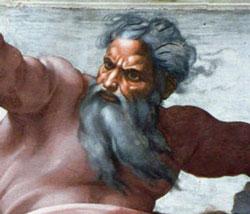
Celie begins to feel resentful towards God because she imagines him as an old white man in the sky who does not care about her just like all the other white males she has encountered. However, Shug helps her to develop a new god. She reminds Celie that she has been blessed with "life, good health, and a good woman that love you to death." Shug encourages Celie to find god in nature. She tells her to not imagine God as the stereotypical white man, but rather an "it."
Celie begins to feel resentful towards God because she imagines him as an old white man in the sky who does not care about her just like all the other white males she has encountered. However, Shug helps her to develop a new god. She reminds Celie that she has been blessed with "life, good health, and a good woman that love you to death." Shug encourages Celie to find god in nature. She tells her to not imagine God as the stereotypical white man, but rather an "it."
foil
"Shug Avery was a woman. The most beautiful woman i ever saw. She more pretty than my mama. She bout ten thousand times prettier then me. I see her there in furs. Her face rouge. Her hair like somethin tail. She grinning with her foot up on somebody motocar" (6)
Shug Avery is a foil character to Celie. Not only is she as beautiful as Celie is homely, but her attitude and demeanor contrasts with that of Celie, especially in the beginning of the novel. Shug does not allow others to control her; Celie continuously subjects herself to the will of males in her life. Also, Shug is outspoke and ignores gender roles. She dresses scantily and lives vicariously.
Shug Avery is a foil character to Celie. Not only is she as beautiful as Celie is homely, but her attitude and demeanor contrasts with that of Celie, especially in the beginning of the novel. Shug does not allow others to control her; Celie continuously subjects herself to the will of males in her life. Also, Shug is outspoke and ignores gender roles. She dresses scantily and lives vicariously.
mother? sister? protector? lover? Shug.

"My heart hurt so much I can't believe it. How can it keep beating, feeling like this? But I'm a woman. I love you, I say. Whatever happen, whatever you do, I love you" (251).
This short passage can not fully explain the relationship between Shug and Celie. From the very first time she saw Shug's picture, Celie recognized the value of her life. When Shug came and lived with Mr.____ and her, she took care of Celie as she would her own sister even though Shug could appear mean. However, Shug and Celie began to share their lives and build a trusting relationship. Along the way, they fell in love with one another. Throughout the novel, Shug is Celie's most dependable and trustworthy confidant.
Tuesday, April 6, 2010
Hi God, it's me Celie
The book uses a language that many critics have deemed "letter language" in which The Color Purple is composed entirely of letters. These letters create and develop all of the characters in the story. Because they are addressed to people she trusts, like God and then Nettie, it shows that she writes the letters because she wants help. These letters become a body for Celie because the take the main brunt of the pain she endures each day; by writing it all down, the hurt is realeased. Writing enables her to continute and keep her self intact and remember her true identity. Almost like a diary, the letters keep her from being forgotten in the world.
Wednesday, March 31, 2010
confuseddd..

At this point in the story, I am slightly confused as to where it is heading. Celie has finally left Mr._____ and is living/in love with Shug (is she in love with her? I dont know..) Nettie is stuck in Africa as far as I know and she does not appear to have plans to come home soon. I foresee the two sisters being reunited at one point, but other than that, I have no idea whats next. I like this aspect of the book because more often than not I find books to be predictable.
-confused; like this kid---->
time & place don't matter

By not establishing a distinct setting, Walker created a story that will last for many more years. The scope is very broad and therfore the themes are universal. All the reader knows is that the story is set somewhere in the South in a rural farm community. Adding to the rural community is the fact that there are few minor characeters that appear throughout the story. The universality of the story probably contributed to the multiple times that it has been appropriate for the AP test.
purple flowers

"She like a queen to me so I say to Kate, Somethin puruple, maybe little red in it too."
Colors are very important symbols in the novel, especially the color purple. When Kate takes Celie to buy new clothes, she wants the color purple because to her it symbolizes royalty. Also, when Celie and Shug are talking about God, they refer to the color purple. Celie reflects on the beauty of the color and that she can't believe that God was able to create something like that. This realization symbolizes her religious awakening and finding God in nature.
Colors are very important symbols in the novel, especially the color purple. When Kate takes Celie to buy new clothes, she wants the color purple because to her it symbolizes royalty. Also, when Celie and Shug are talking about God, they refer to the color purple. Celie reflects on the beauty of the color and that she can't believe that God was able to create something like that. This realization symbolizes her religious awakening and finding God in nature.
letters to no one

"What is it? I ast. She don't know but she gone fin out" (Walker, 6).
Because Celie is the writer of the the letters throughtout the majoriy of the novel, Walker utilizes an uneducated dialect and form of writing. Words are spelled phonetically, and more often that not, mispelled. Also, the novel lacks little to no proper punctuation. This realistic style of writing adds to the Celie's passive and downtrodden nature. When Nettie is the author of the letters, the contrast is stark and obvious. With her education, she has learned how to spell and better use proper grammer.
Because Celie is the writer of the the letters throughtout the majoriy of the novel, Walker utilizes an uneducated dialect and form of writing. Words are spelled phonetically, and more often that not, mispelled. Also, the novel lacks little to no proper punctuation. This realistic style of writing adds to the Celie's passive and downtrodden nature. When Nettie is the author of the letters, the contrast is stark and obvious. With her education, she has learned how to spell and better use proper grammer.
high of 74 & sunny today..perfect

"Talk to Mr.____, I say. He your daddy. Maybe he got some good advice" (Walker, 31)
In the story, Walker often withholds surnames and instead uses blank lines for the names of males in the story. This draws attention to male dominance and the physcological power of men in the story. Not only does she refer to Celie's husband with the omitted surname, but she also talks about men such as the Reverend that way too. Contrastingly, when Walker does not insert a blank line, she is lowering the level of power that the men have. Men such as Harpo and Gradie have less dominance over woman.
In the story, Walker often withholds surnames and instead uses blank lines for the names of males in the story. This draws attention to male dominance and the physcological power of men in the story. Not only does she refer to Celie's husband with the omitted surname, but she also talks about men such as the Reverend that way too. Contrastingly, when Walker does not insert a blank line, she is lowering the level of power that the men have. Men such as Harpo and Gradie have less dominance over woman.

Subscribe to:
Comments (Atom)